





Ukraine’s agri-food sector is moving beyond the restoration of production capacity towards modernisation, deeper processing and more competitive value chains. For businesses and investors, the opportunity lies in improving productivity, retaining more value domestically and diversifying export markets.
However, security risks, damaged infrastructure, constrained export routes and evolving EU accession requirements continue to shape project economics. The Centre for Economic Strategy identifies port restrictions, production losses and damage to logistics infrastructure among the factors weighing on economic activity in August–September 2026. A strong harvest and the redirection of exports to alternative routes partly offset these pressures.[1]
Logistics and Market Access: Key Investment Considerations
Storage, transportation and energy security directly affect operating costs, working capital requirements and revenue predictability. Following attacks on port and logistics infrastructure, Ukraine faces additional pressure on grain storage capacity. According to the Ministry of Agrarian Policy and Food, the storage deficit could reach 11 million tonnes in autumn 2026, with an estimated USD 44 million required to address storage needs.[2]
For investors, this reinforces the case for projects that address several operational constraints simultaneously. Modern storage and handling facilities, alternative logistics routes, reliable energy supply and digital management systems can help reduce infrastructure dependencies and improve business continuity. Investment assessments should account for contingency costs, transport availability and the ability to maintain operations under disrupted conditions.
EU accession adds another dimension to market access. On 6 October 2026, the European Commission outlined proposed targeted arrangements for Ukraine’s agricultural sector, citing its scale, structure and productivity. These arrangements could limit access to EU agricultural support and the European market for sensitive products while helping Ukraine regain access to traditional third-country export markets.[3]
The proposal reflects concerns about the impact of Ukraine’s highly productive agricultural sector on EU farmers. The precise terms remain subject to negotiations; they should not be treated as an agreed accession framework.
For Ukrainian agribusinesses, the commercial implications extend beyond regulatory alignment. EU integration will require businesses to assess not only how to enter European markets, but also how to remain competitive if market access and agricultural support differ from those available to existing EU members. Diversifying export destinations, strengthening relationships with international buyers and expanding processing capacity can reduce dependence on any single market.
Where Investment Opportunities Are Emerging
Three priorities stand out for their potential to improve competitiveness and strengthen supply chains.
- Production modernisation and resource efficiency. Investments in automation, precision agriculture, irrigation, soil rehabilitation, renewable energy and water management can improve productivity while reducing exposure to resource constraints and volatile operating costs. Land rehabilitation and demining also require careful assessment of restoration costs, infrastructure availability and the economics of future production.
- Processing and higher-value products. Expanding domestic processing can retain more value within Ukraine, diversify export revenues and reduce reliance on unprocessed commodities. Opportunities include oilseed processing and refining, food manufacturing, flour milling, horticulture, meat and poultry processing, and biogas and biomethane production. Projects combining processing with storage, dependable energy and reliable raw-material sourcing may offer stronger operational resilience.
- Integrated value chains and export diversification. Contract farming, aggregation models and shared infrastructure can connect smaller producers with processors and international buyers. These arrangements can improve supply reliability, quality control and traceability while helping businesses access markets with more demanding requirements.
Across all three areas, commercial viability will depend on demonstrated demand, competitive production costs, dependable logistics and clearly defined sales channels.
EU Integration: Compliance as a Business Capability
European integration creates opportunities to develop trade relationships and attract investment, but it also raises expectations for food safety, traceability, veterinary and phytosanitary controls, environmental performance and resource efficiency.
Businesses seeking international financing or strategic partnerships must also demonstrate reliable financial reporting, transparent ownership, effective internal controls and sound risk management. Depending on their size, legal status and financing arrangements, independent audits or other assurance may be required.
For small and medium-sized enterprises, these capabilities can determine whether they are ready to participate in export-oriented supply chains, access financing and meet the requirements of international counterparties. Early investment in compliance and management processes can reduce future adaptation costs and strengthen investor confidence.
From Recovery Priorities to Investment Decisions
Recovery funding, guarantees and blended-finance instruments can help mobilise private capital, but they do not replace commercial due diligence. Investors need realistic financial projections, transparent governance, clearly allocated risks and an implementation model that reflects Ukraine’s operating environment.
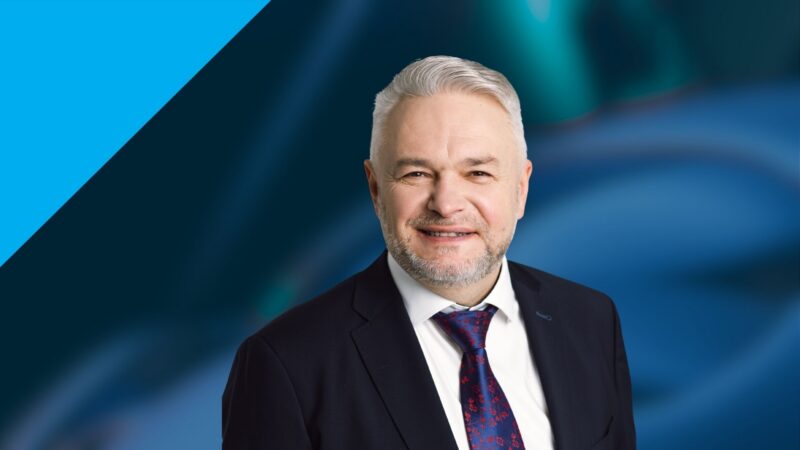
As Alexander Yakovlev, Managing Partner, notes: “The investment opportunity in Ukraine’s agri-food sector extends beyond restoring lost capacity. The priority is to build businesses that can operate reliably, capture more value through processing and compete across markets. That requires investment decisions grounded in commercial viability, resilient supply chains and readiness to meet international standards.”
For businesses considering investment in Ukraine, the focus should be on projects that combine a clear market rationale with realistic risk allocation, operational resilience and a credible route to profitability.
The next phase of Ukraine’s agri-food recovery will depend not only on restoring production, but on building stronger value chains, expanding higher-value exports and developing the capabilities needed to compete in an increasingly integrated European market.
Moore Kyiv, Ukraine supports businesses in assessing investment opportunities, developing commercial and financial business cases, structuring projects and managing risks. This helps investors and project owners translate recovery priorities into viable investment decisions aligned with their strategic objectives and the realities of the Ukrainian market.