




The Beginning of a New Economic Chapter
The Ukraine Recovery Conference 2026 (URC 2026) marked an important milestone in the evolution of the international dialogue on Ukraine’s recovery. While previous conferences focused primarily on mobilising emergency assistance and consolidating international support, this year’s discussions increasingly centred on implementation, investment readiness and the country’s long-term economic capacity.
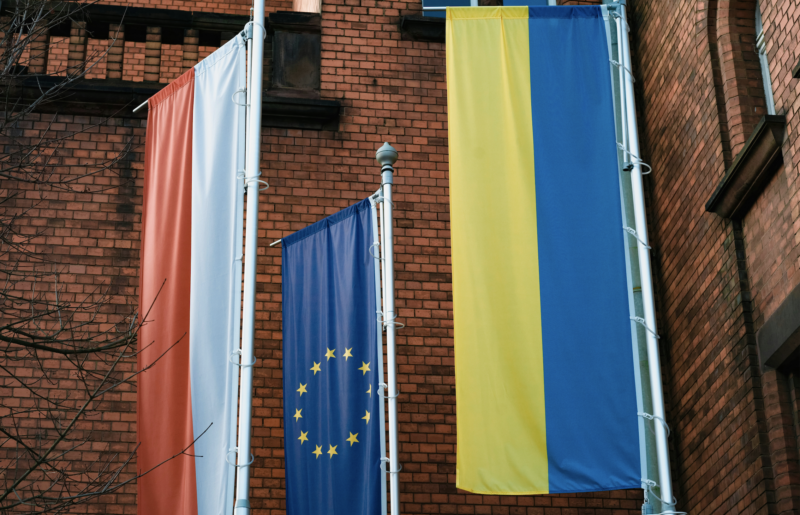
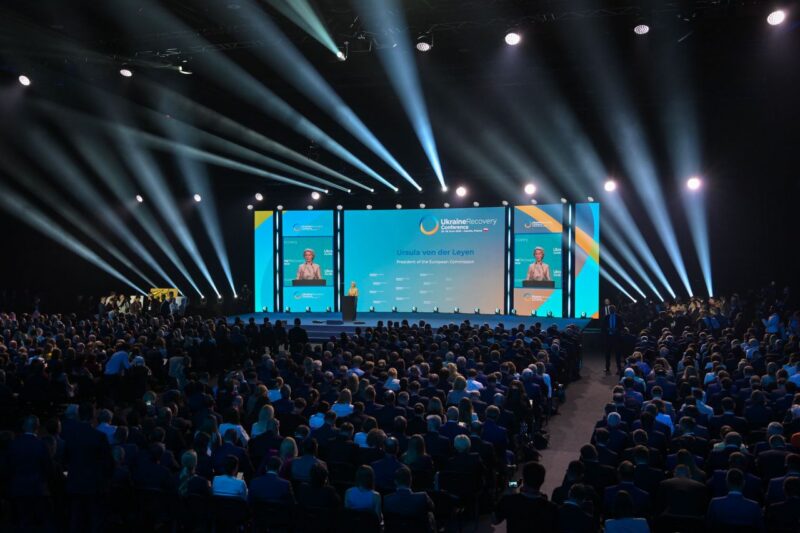
Co-hosted by Poland and Ukraine, URC 2026 in Gdańsk brought together heads of state and government, international financial institutions, development banks, donors, investors, business leaders, municipalities and civil society around a shared objective: accelerating Ukraine’s recovery through stronger public-private cooperation and deeper integration into the European economy.
The conference outcomes clearly reflected this strategic direction. More than 160 agreements worth over €10 billion were concluded, alongside the launch of new financing instruments, infrastructure initiatives and investment platforms designed to mobilise both public and private capital.
For the business community, URC 2026 delivered a clear message: Ukraine’s reconstruction is steadily evolving into one of Europe’s largest long-term investment and economic transformation programmes.
What Makes URC 2026 Different
Rather than following the traditional donor-conference model, this year’s event positioned itself first and foremost as a high-level investment platform focused on mobilising private capital, accelerating investment transactions and supporting Ukraine’s long-term economic transformation.
At the same time, increasing attention was devoted to project quality, governance, institutional capacity and investor confidence — factors that are becoming essential for attracting long-term investment.
Another notable development was the introduction of the Security and Defence Dimension, integrated into the URC agenda for the first time. Its inclusion reflected a growing recognition that sustainable recovery and investment cannot be achieved without a resilient security architecture.
Compared with previous recovery conferences, URC 2026 demonstrated a notable evolution in both priorities and implementation mechanisms. Perhaps most significantly, reconstruction is increasingly being viewed as Europe’s next major investment programme, rather than solely a humanitarian or post-war assistance initiative.
| Previous URCs | URC 2026 |
|---|---|
Mobilising international assistance | Mobilising private investment |
Identifying reconstruction needs | Preparing investment-ready projects |
Donor funding | Blended finance and institutional capital |
Emergency resilience | Long-term competitiveness |
Public sector leadership | Public-private partnership |
Recovery planning | Investment execution |
URC 2026 at a Glance
The conference delivered a number of important financial and institutional outcomes that are expected to accelerate Ukraine’s recovery:
- More than 160 agreements with a combined value exceeding €10 billion.
- Over 30 new strategic partnerships announced in addition to the formally signed agreements.
- €3.2 billion disbursed as the first tranche under the European Union’s new Ukraine Support Loan.
- US$3.4 billion World Bank agreement under the First Growth and Jobs Development Policy Operation (DPO).
- Launch of the European Flagship Fund for the Reconstruction of Ukraine, expected to mobilise approximately €500 million in its initial phase through cooperation with the European Investment Bank (EIB) and the European Bank for Reconstruction and Development (EBRD).
- Establishment of the Ukraine Transport Support Fund to strengthen transport connectivity and logistics.
- €140 million allocated to housing programmes.
- A new agreement between Ukraine and the European Investment Bank supporting the restoration and protection of transport infrastructure in frontline regions.
- Launch of a permanent Energy Platform to coordinate long-term international support for Ukraine’s energy resilience.
- More than 80 Ukrainian companies participated in the largest URC Business Fair to date, alongside approximately 2,000 business representatives from around the world.
Taken together, these initiatives demonstrate a gradual shift from a donor-driven assistance model towards investment-led recovery supported by international financial institutions and private capital.
Key Themes of URC 2026
One of the conference’s defining features was a clear shift in focus — from discussing what Ukraine needs to addressing how investment projects can be successfully delivered. Several strategic priorities emerged from the discussions.
- From Recovery Planning to Project Delivery
The focus has shifted from identifying reconstruction priorities towards building investment pipelines, preparing projects for financing and strengthening institutional capacity to deliver complex infrastructure programmes.
Recovery projects were increasingly viewed not as standalone investments, but as components of broader economic ecosystems. A logistics hub, for example, becomes commercially viable only when integrated with transport corridors, customs procedures, rail and port infrastructure, warehousing capacity, border infrastructure and genuine market demand.
Likewise, manufacturing facilities require reliable energy supply, a skilled workforce, dependable suppliers, certification compliance, export routes and digital infrastructure.
This systems-based approach reinforced an important conclusion: connectivity is no longer simply an infrastructure issue — it has become a prerequisite for attracting investment.
- Private Capital Is Becoming Central to Recovery
Public funding and international donor support remain indispensable. However, one message resonated clearly throughout the conference: Ukraine’s recovery cannot be financed through public resources alone.
Private investment must become one of the primary drivers of reconstruction, supported by blended finance, guarantees, political risk insurance, international financial institutions and public-private partnership mechanisms.
This transformation of the financing model significantly expands opportunities for international businesses, investors and professional advisory firms.
- Recovery and EU Integration: One Transformation Agenda
One of the strongest messages of URC 2026 was that Ukraine’s reconstruction is becoming increasingly integrated with its European integration process.
Infrastructure, regulatory reforms, public procurement, corporate governance, ESG, digitalisation and institutional development are no longer separate reform tracks. Together, they form the foundation of Ukraine’s future membership in the European Union.
For investors, this convergence offers greater predictability while strengthening Ukraine’s long-term competitiveness as part of the European market.
Spotlight: Ukraine Recovery in Action
Among the conference’s most business-oriented discussions, the side event “Ukraine Recovery in Action” provided practical insight into how reconstruction is expected to evolve over the coming years. Rather than focusing on funding announcements alone, the discussion explored the conditions necessary to attract long-term private investment.
Investment Readiness Is the New Competitive Advantage
Throughout the conference, one message was particularly consistent: the greatest constraint is no longer the availability of international capital, but the availability of investment-ready projects. Ukraine possesses substantial recovery needs, yet transforming those needs into investable opportunities requires structured project preparation, institutional coordination and adherence to international financing standards.
Participants stressed that investors are no longer looking simply for reconstruction needs. They require projects supported by:
- robust financial models;
- legal certainty;
- technical documentation;
- transparent governance;
- effective risk allocation;
- realistic implementation mechanisms.
Discussions highlighted that project preparation should be viewed as a structured investment process rather than a preliminary administrative exercise. Commercial viability, technical feasibility, financing models, procurement strategies, environmental and social assessments, legal frameworks and implementation readiness increasingly determine whether projects progress from concept to execution.
In other words, reconstruction priorities must be translated into bankable projeccts capable of attracting institutional capital.
Human Capital Will Define the Pace of Recovery
Infrastructure alone will not rebuild Ukraine. Participants consistently identified human capital as one of the country’s most strategic assets — and one of its greatest challenges.
Engineers, project managers, skilled workers, entrepreneurs, technology specialists and public administrators will determine how effectively investment is converted into completed projects.
Importantly, the Ukrainian diaspora was increasingly viewed not as a consequence of war, but as an international network capable of attracting investment, transferring expertise and strengthening business partnerships across Europe.
Reputation Is Becoming Economic Infrastructure
Beyond physical reconstruction, Ukraine must continue strengthening international confidence. Trust increasingly functions as an economic asset capable of reducing investment risk and improving access to international capital. Conference participants highlighted several areas that directly influence investor decisions:
- regulatory predictability;
- transparent corporate governance;
- anti-corruption reforms;
- protection of contractual rights;
- digital public services;
- compliance with European standards.
From Projects to Investment Platforms
One of the conference’s most practical conclusions was that successful recovery projects cannot be developed in isolation.
Infrastructure investments increasingly need to be designed as interconnected systems rather than individual assets. Transport projects must align with logistics corridors, border infrastructure and customs modernisation. Industrial developments require reliable energy, workforce availability, supply chains, certification and export access. Municipal infrastructure becomes significantly more attractive when integrated into regional development strategies, utility planning and sustainable financing mechanisms.
This integrated approach closely reflects Ukraine’s broader alignment with European Union standards across transport, energy, customs and digital infrastructure.
As reconstruction accelerates, competitive advantage will increasingly depend not only on identifying priority sectors, but also on developing coordinated investment ecosystems capable of generating long-term economic value.
Strategic Investment Priorities
Ukraine’s damaged energy system presents an opportunity not simply to rebuild existing infrastructure but to develop one of Europe’s most modern and resilient energy networks.
Priority investment areas include distributed generation, renewable energy, battery storage, flexible gas generation, biomethane production and local energy hubs supporting municipalities and industrial parks.
Digital transformation continues to position Ukraine among Europe’s most innovative economies.
Conference discussions highlighted investment opportunities in 5G infrastructure, cloud technologies, AI applications, cybersecurity, data centres and digital public services.
Importantly, digitalisation is no longer viewed as a standalone sector but as an enabler of productivity across healthcare, agriculture, manufacturing, logistics and governmen
PPP models are expected to become increasingly important for delivering transport, municipal and energy infrastructure.
However, participants emphasised that successful partnerships depend less on legislation than on project quality, balanced contractual structures, institutional capacity and transparent implementation.
Participants also noted that many promising municipal and infrastructure initiatives fail to attract financing not because of insufficient demand, but because essential preparation stages remain incomplete. Procurement strategies, risk allocation, governance arrangements and financing structures must be developed before projects can successfully engage institutional investors, development finance institutions or export credit agencies.
Ukraine’s defence sector has evolved into one of the country’s fastest-growing innovation ecosystems.
Built under wartime conditions, it increasingly combines advanced engineering, rapid product development and international collaboration.
Its future integration with European defence industries is expected to generate long-term industrial, technological and export opportunities.
Ukraine’s agricultural sector continues to play a strategic role in European food security.
Conference participants encouraged repositioning the sector from a source of market competition to a contributor to Europe’s resilience, sustainability and strategic autonomy through advanced agri-tech, precision farming and stronger integration of agriculture, energy and digital technologies.
Discussions also highlighted growing opportunities in industrial localisation, electric mobility, component manufacturing and integration into European supply chains.
Ukraine’s future competitiveness will increasingly depend not on lower production costs, but on engineering capability, innovation, resilience and proximity to EU markets.
What This Means for Business
URC 2026 confirmed that reconstruction is becoming significantly more sophisticated.
As investment volumes increase, businesses will face growing expectations regarding governance, transparency, ESG reporting, financial reporting, compliance and risk management.
For investors, these factors increasingly determine project bankability.
For Ukrainian companies, they represent an opportunity to strengthen competitiveness and build long-term partnerships with international capital.
Professional advisory services — including audit, tax, legal, financial advisory, transaction support and project assurance — will play an increasingly important role in preparing investment-ready projects and supporting implementation throughout the reconstruction lifecycle.
Moore Perspective
The discussions in Gdańsk highlighted a fundamental shift in Ukraine’s recovery journey.
The conversation is no longer centred solely on rebuilding damaged infrastructure, but on shaping a competitive European economy that attracts investment, accelerates innovation and creates long-term value.
Recovery, EU accession and private-sector development are becoming increasingly interconnected.
As Ukraine continues aligning with European standards and strengthening institutional capacity, the country’s greatest competitive advantage will not simply be the scale of reconstruction — it will be its ability to transform resilience into sustainable economic growth, supported by transparent governance, investment-ready projects and trusted international partnerships.