




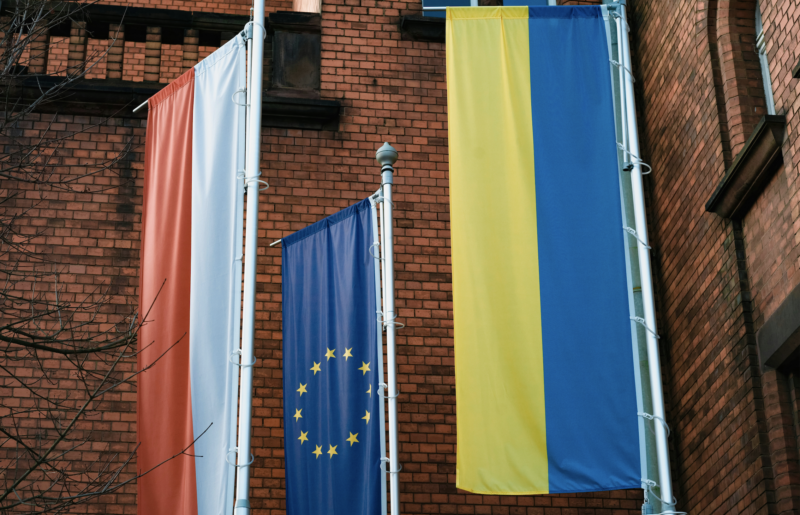
Polish business activity in Ukraine is entering a new phase. The relationship between the two markets is gradually moving beyond traditional trade and supply-chain cooperation towards a broader investment model built around acquisitions, industrial expansion, financial services, infrastructure development and long-term market positioning.
Despite the ongoing war, Polish companies continue to commit capital to Ukraine. Recent transactions and projects demonstrate that investors are not only responding to immediate reconstruction needs but are positioning themselves for the next stage of Ukraine’s economic development as the country moves closer to European integration.
According to Ukraine Business News (UBN), Polish companies continue to expand in Ukraine across energy, finance, infrastructure and manufacturing. Recent examples include Maspex’s acquisition of an 80% stake in Trading House Karpatski Mineralni Vody, fintech company ZEN.com’s acquisition of PINbank, infrastructure projects involving Unibep and planned investments by Unimot and Hanplast. At the same time, long-established investors such as Cersanit and Barlinek continue operating and investing in Ukraine despite wartime challenges.
These cases demonstrate a broader trend: Polish companies are moving from being exporters to Ukraine towards becoming long-term participants in the Ukrainian market.
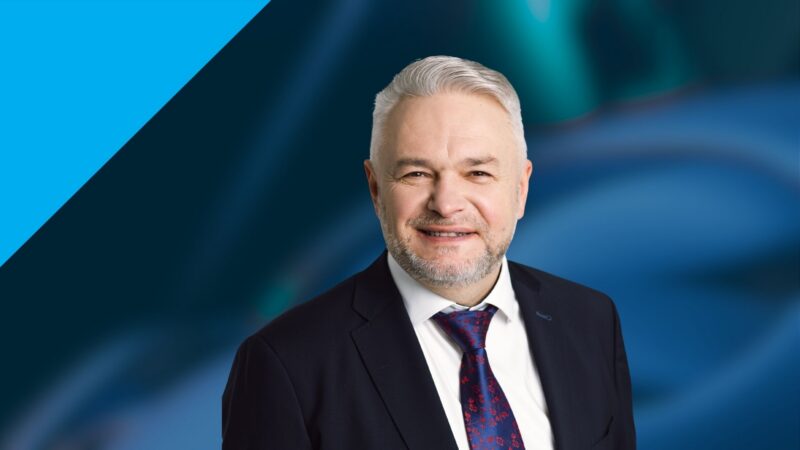
Alexander Yakovlev, Managing Partner, Moore Kyiv, Ukraine says: “Polish business activity in Ukraine is entering a new stage — moving from traditional trade cooperation towards strategic investment positioning. Companies are no longer focused only on supplying the Ukrainian market; they are building production capacity, financial solutions and infrastructure that support long-term growth. For investors, the current environment requires a balance between risk management and strategic vision. Those who establish strong partnerships and understand local market dynamics today may gain a significant advantage as Ukraine’s economy becomes increasingly integrated with European markets.”
The transformation highlighted by Alexander Yakovlev is already visible across multiple sectors of the Ukrainian economy. Recent investment activity shows that Polish companies are moving beyond traditional export models and increasingly adopting a long-term market participation strategy.
From trade relations to investment integration
Poland has historically been one of Ukraine’s most important economic partners. However, the current phase of cooperation differs significantly from previous years.
Before 2022, much of Polish-Ukrainian economic interaction was driven by trade, outsourcing, manufacturing cooperation and cross-border supply chains. Today, the focus is increasingly shifting towards ownership, financing and infrastructure.
This change is driven by several factors.
- First, Polish companies have a unique advantage compared with many other foreign investors: proximity combined with market experience. Many have operated in Ukraine for years, developed local teams and established relationships with suppliers, customers and regulators.
- Second, Ukraine’s future European integration creates a strategic opportunity. Companies entering the market today are not only assessing current demand but also the potential of a larger, more integrated Ukrainian economy connected to EU value chains.
- Third, the current market environment creates opportunities for investors prepared to manage complexity. Lower valuations, limited competition in certain sectors and the possibility of establishing early market positions are becoming important investment considerations.
The result is a shift from a transactional model — selling products and services into Ukraine — towards a strategic model based on building market presence.
Manufacturing and consumer markets: investing in Ukraine’s domestic potential
One of the clearest indicators of long-term confidence is continued investment in Ukrainian production capacity.
The example of Maspex, one of Poland’s largest food groups, is particularly illustrative. The company’s acquisition of an 80% stake in Trading House Karpatski Mineralni Vody demonstrates interest in Ukrainian consumer markets and local production capabilities.
The logic behind such investments extends beyond short-term market opportunities.
For manufacturers, Ukraine offers several strategic advantages:
- access to a large domestic consumer market;
- skilled workforce and industrial capabilities;
- geographical proximity to the EU;
- potential integration into European production networks.
Long-term investors are also supported by the experience of companies that entered Ukraine before the full-scale invasion and continued operations despite significant challenges.
According to UBN, Cersanit has invested more than $187 million in Ukraine since 2008, while Barlinek has invested more than €110 million since 2007. Their continued presence demonstrates an important market signal: companies with established operational knowledge are often willing to maintain and develop their Ukrainian footprint even under difficult conditions.
For new investors, such examples reduce uncertainty by demonstrating that successful business models can operate in Ukraine over the long term.
Financial sector expansion: building the infrastructure for investment
The development of financial infrastructure is one of the most important factors supporting further investment activity.
Foreign investors require more than business opportunities; they need access to financing, payment systems, risk management instruments and reliable financial partners.
Polish financial institutions have become increasingly important in this area.
Through Kredobank, part of the PKO Bank Polski Group, Polish financial expertise has maintained a presence in the Ukrainian banking market. Cooperation with international financial institutions, including guarantee mechanisms supported by the European Bank for Reconstruction and Development (EBRD), demonstrates how risk-sharing models can expand financing opportunities during wartime.
This approach addresses one of the central challenges facing Ukraine: commercial opportunities exist, but financing remains constrained by elevated risk perceptions.
Guarantees and blended financing mechanisms change the investment equation by allowing banks and investors to distribute risk among commercial, governmental and international partners.
The financial sector is also attracting new entrants. The acquisition of Ukrainian PINbank by fintech company ZEN.com illustrates growing interest in Ukraine’s digital financial infrastructure and the potential for innovation-driven business models.
Insurance is another critical component. Institutions such as KUKE contribute to reducing trade and investment risks by providing instruments that support companies operating in uncertain environments.
The broader implication is significant: Poland is not only bringing capital into Ukraine but also helping create the financial architecture required for further private investment.
Energy and logistics: positioning Ukraine within European supply chains
Two sectors demonstrate particularly clearly how Polish companies view Ukraine’s future economic role: energy and logistics.
Energy resilience and new infrastructure
The war has fundamentally changed the importance of energy investment. Energy projects are no longer viewed only through the lens of profitability; they are also connected with resilience, decentralisation and economic security.
Projects such as Hanplast’s KovelEnergoPort renewable energy initiative, involving solar generation and energy storage, demonstrate the growing role of private investment in strengthening Ukraine’s energy system.
Similarly, Unimot’s planned investment in a fuel and energy complex in the Lviv region reflects the strategic importance of energy infrastructure close to European borders.
For investors, energy is becoming both a business opportunity and a foundation for future industrial development.
Logistics as the backbone of European integration
Poland’s role as Ukraine’s main western gateway gives logistics particular strategic importance.
Infrastructure projects such as the planned reconstruction of the Shehyni–Medyka border crossing and the proposed M10 highway connecting the Korczowa–Krakivets checkpoint with Lviv demonstrate the growing importance of transport connectivity.
These projects have implications beyond physical infrastructure. They support:
- movement of goods between Ukraine and EU markets;
- relocation and expansion of manufacturing;
- development of regional supply chains;
- integration of Ukrainian producers into European networks.
Logistics assets, therefore, are not simply infrastructure investments. They represent strategic positioning for future trade flows.
Why Polish companies are investing now
The timing of current investment decisions deserves particular attention. The traditional investment approach would suggest waiting until uncertainty declines. However, many Polish companies appear to be following a different logic: establishing positions before market conditions change.
This strategy is based on several expectations:
- Ukraine’s market value is likely to increase. As European integration progresses, improved regulatory alignment, stronger institutions and increased international confidence may raise asset valuations.
- Competition will intensify. Companies entering later may face stronger competition from global investors that currently remain cautious.
- Local expertise will become a competitive advantage. Companies operating in Ukraine today gain knowledge of the market, regulatory environment and business networks that cannot be acquired quickly.
This creates a first-mover advantage for investors capable of managing operational risks.
The next investment phase will depend on institutional quality
While investment momentum is growing, Polish businesses continue to emphasise several conditions necessary for scaling activity.
Among the key priorities identified by investors are:
- affordable war-risk insurance;
- guarantees from international financial institutions;
- predictable regulation;
- protection of property rights;
- easier movement of capital;
- trust between business and public institutions;
- effective rule of law.
These factors directly influence investment economics and remain key considerations for investors. For example: better risk coverage reduces financing costs; regulatory predictability improves investment planning; stronger legal protection reduces transaction risk; transparent governance increases investor confidence.
Institutional development therefore becomes an economic factor directly affecting the volume and cost of investment.
Moore perspective: supporting cross-border growth in Ukraine
As Polish and international companies expand their activities in Ukraine, successful market entry will require more than identifying opportunities.
Businesses will need integrated support covering:
- investment structuring;
- financial and tax analysis;
- due diligence;
- accounting and reporting requirements;
- compliance and governance;
- cross-border operations.
The Ukrainian market is becoming increasingly connected with European business standards. Companies that combine local market understanding with international expertise will be best positioned to manage complexity and capture long-term opportunities.
The expansion of Polish business activity demonstrates a broader transformation: Ukraine is moving from being primarily a neighbouring trade market towards becoming an investment destination integrated into European economic networks.
For companies willing to build positions early, the current period represents not only a challenge — but a strategic opportunity.